


For manufacturers considering business relocation to Texas, the biggest challenge is not just finding a lower-cost location—it is finding a community that can help solve operational problems quickly and supply skilled talent consistently. In this episode, Tyler Esters of CSI explains how the company’s Kilgore plant produces roughly 30 million bottle caps a day while relying on local partnerships, Texas infrastructure, Kilgore EDC, and Kilgore College to support growth. The Texas-sized solution is a business environment where global manufacturing scale meets local responsiveness, giving companies a soft landing without having to sort through the noise on their own.
Source Link: Listen to the full episode on GoneToTexasPodcast.com to hear Tyler Esters’ full conversation with Super Dave Quinn.
When executives think about relocating or expanding a manufacturing operation, the conversation usually starts with land, labor, taxes, utilities, and transportation.
But once the plant is running, the real test begins.
Can you get material in and product out? Can you find skilled workers? Can you solve a warehousing issue on short notice? Can your local partners move at the speed your customers expect?
For CSI in Kilgore, Texas, the answer has been yes.
In this episode of Gone to Texas, sponsored by Kilgore Economic Development Corporation, Tyler Esters, plant manager at CSI, shares how a global bottle cap manufacturing company continues to grow in East Texas by pairing large-scale production with local relationships, practical workforce partnerships, and a “show up” operating culture.
For business owners, executives, and site selectors evaluating Texas, this episode offers a grounded look at what makes Kilgore more than another dot on the map.
It shows what happens when a company finds a community that answers the phone.
Business Relocation Insight #1: Kilgore Supports Global Manufacturing at Serious Scale
CSI is not a small operation.
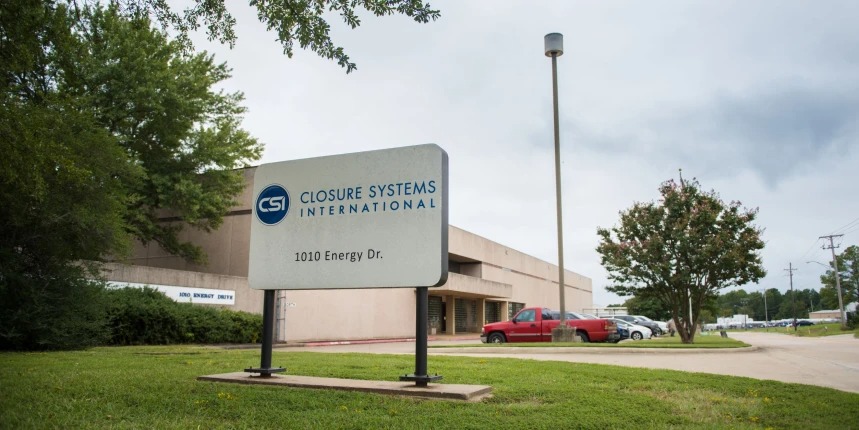
Tyler explained that CSI is a global manufacturing company that produces closures—in everyday language, bottle caps. The Kilgore plant alone makes roughly 30 million caps per day.
That number matters for site selection.
High-volume manufacturing places pressure on every part of an operation: equipment reliability, quality control, labor, logistics, suppliers, maintenance, and customer response. At CSI, some production lines run around 1,200 caps per minute, requiring vision systems and tight quality controls to identify defects at speeds the human eye cannot catch.
The plant serves multiple product categories, including medical, food-grade, dairy, water bottle, and oil closures. That level of output and variety requires both technical sophistication and operational discipline.
For companies considering business relocation to Texas, CSI’s story proves that Kilgore is not just a lower-cost alternative. It is a place where a global manufacturer can operate at scale.

Texas Economy Insight #2: Infrastructure and Supplier Access Matter More Than Ever
One of the practical advantages Tyler highlighted is CSI’s access to materials and transportation.
The company uses resin as a key input, and Tyler noted that Texas gives CSI proximity to resin manufacturers, including suppliers in the Houston area and Longview. Resin can come in by railcar, be unloaded into silos, or arrive in totes, depending on the need.
That gives the Kilgore plant flexibility.
Tyler also pointed to Kilgore’s location near major highways, including I-20, as a major advantage. In urgent situations, the company can often receive material from the Houston area the same day.
For manufacturers, that is a real operating advantage.
Texas is a big state, but the right location can give companies access to suppliers, customers, highways, rail, and regional markets without the gridlock and cost pressures of larger metros.
In a world where supply chain disruptions can affect customer relationships overnight, infrastructure is not just a convenience. It is a competitive edge.
Site Selection Insight #3: Local Economic Development Partners Can Solve Real-Time Business Problems
One of the strongest moments in the episode came when Tyler described a recent warehousing issue.
CSI had an off-site warehouse problem over the weekend and needed a quick local solution. Tyler texted Lisa from Kilgore Economic Development Corporation, and by Monday morning, James was ready to meet and review possible options.
“I just texted Lisa and said, ‘Hey, do you guys know of anything locally?’ And Monday morning 8:00, I called James and James said, ‘Yeah, meet me over here and let’s go look and see what we have.’”
That story captures something business owners in high-tax, high-regulation states may not be used to: local leaders who want to help.
Not months later. Not after a committee meeting. Not after a mountain of paperwork.
Right away.
Tyler connected that directly to CSI’s own culture. The company has what he called a “show up mentality”. When there is a problem, people respond. Managers meet. Warehouse leaders come in. The team works on the issue.
So when Kilgore EDC responds with the same urgency, it matters.
“It means a lot because that’s our culture. So it means a lot when you have a supportive partner to meet you there too.”
For a CEO or plant manager considering a move to Texas, that kind of local support can be the difference between feeling stranded and feeling backed up.
Economic Development Insight #4: Workforce Development Is Strongest When Industry and Education Stay Close
CSI’s Kilgore workforce is about 200 employees, with many roles requiring technical skill. Tyler described positions ranging from end-of-line operations to injection molding specialist, maintenance technician, and skilled manufacturing roles.
That kind of operation needs more than applicants. It needs a talent pipeline.
Tyler credited local education partnerships as part of that solution, especially Kilgore College and its process technology and industrial electronics programs. He also mentioned Texas State Technical College as another regional workforce asset.
For CSI, staying connected to Kilgore College is not a theoretical community initiative. It is a practical hiring strategy.
Internships are also part of the company’s approach to workforce development. Tyler said CSI pays interns and sees them as potential long-term team members, not just students checking a box.
The logic is simple: if students spend time inside the company, learn the culture, and gain real manufacturing experience, they can come back ready to contribute.
That is exactly the kind of workforce-development alignment site selectors look for.
Companies do not just need a labor market. They need schools, colleges, employers, and economic development partners that talk to one another and respond to what industry actually needs.
Business Relocation Insight #5: Kilgore’s Manufacturing Culture Is Built on Accountability and Accessibility
Tyler’s leadership story is also part of the business case for Kilgore.
He started at CSI as a mechanic, went back to school to learn electrical and programming skills, pursued engineering, earned a business degree from UT Tyler, and later completed a master’s program at Texas A&M. Today, he serves as plant manager.
That career path says something important about the opportunity available in East Texas manufacturing.
CSI has created progression plans in its departments, showing employees what they need to do to move to the next level. Tyler said the company is open with pay ranges and expectations, which gives employees a reason to keep growing.
He also described a conscious decision to make management more visible. When he became plant manager, he moved his office from the upper floor to the lower floor so employees could reach him more easily. Other managers followed.
That may sound simple, but in manufacturing culture, visibility matters.
It tells employees that leadership is present, accountable, and accessible.
CSI also invests in employee engagement through traditions like Family Day, even shutting down the plant so employees can participate. Tyler said the company’s voluntary turnover is hovering around 2%, an impressive figure for manufacturing.
For companies evaluating Kilgore, that points to more than available labor. It points to a community and company culture where people can build careers.
Site Selection Insight #6: Texas Labor Is Competitive—But It Is Not “Cheap Labor”
One of the most practical parts of the conversation was Tyler’s discussion of wages.
Super Dave raised a common misconception: some relocating companies see Texas’ minimum wage and assume labor will be extremely cheap.
Tyler clarified the reality.
At CSI, entry-level positions generally start around $17 to $18 per hour, with highly skilled employees making into the $30s per hour. Interns are paid around $15 per hour.
That is an important message for business owners.
Texas can be more affordable than many high-cost states, but successful companies do not win here by underpaying people. They win by matching competitive wages with a lower overall cost structure, stronger operating conditions, better local support, and a workforce that wants opportunity.
In other words, Texas is not a race to the bottom.
It is a better platform for growth.
Texas Economy Insight #7: Reliability Creates New Growth Opportunities
Tyler said he is excited about CSI’s future because the Kilgore plant has improved reliability and efficiency.
He referenced operational equipment efficiency, noting that the plant is operating at around 80%, above the benchmark he associated with the Toyota Way of 75%. That improved reliability gives customers confidence and can open the door for new product opportunities.
That is a core manufacturing lesson.
Growth does not only come from sales. It comes from operational trust.
When a plant can prove reliability, respond to problems, support customers, and maintain quality at scale, it becomes easier for sales teams to win new work and for customers to place more confidence in that location.
For Kilgore, that matters because every successful expansion story strengthens the region’s manufacturing brand.
What CSI’s Story Means for Companies Considering Kilgore, Texas
For manufacturers looking at Texas, CSI’s experience offers several clear takeaways:
Kilgore Can Support High-Volume Manufacturing
A plant producing roughly 30 million caps per day is proof that East Texas can support serious production scale.
The Region Has Practical Logistics Advantages
Access to highways, rail, resin suppliers, and markets in Houston, Longview, Dallas, Galveston, Austin, and the broader Texas region gives manufacturers options.
Local Partners Move Quickly
Kilgore EDC’s fast response to CSI’s warehousing challenge is exactly the kind of hands-on support companies need when operational issues appear.
Workforce Pipelines Are Being Built Locally
Kilgore College, TSTC, internships, and employer engagement are creating pathways for skilled manufacturing talent.
Community Culture Supports Retention
CSI’s focus on accessibility, accountability, progression, family culture, and employee engagement shows how local operations can reduce turnover and strengthen performance.
Gold Nugget Quotes From Tyler Esters
“Our plant in Kilgore makes roughly 30 million a day.”
“It means a lot because that’s our culture. So it means a lot when you have a supportive partner to meet you there too.”
“Getting plugged in locally… has definitely been a game changer for us.”
Resources Mentioned in This Episode
- CSI
- Kilgore Economic Development Corporation
- Kilgore College
- Texas State Technical College / TSTC
- Synergy Park
- UT Tyler
- Texas A&M
- I-20
- Houston-area resin manufacturers
- Longview resin suppliers
- Galveston
- Dallas
- Austin
- Country Tavern
- The Back Porch
- Texas Economic Development Connection
- Day One Experts
- GoneToTexasPodcast.com
- Six Sigma
- Toyota Way
- Vision systems
- Process technology programs
- Industrial electronics programs
- Injection molding
- Operational equipment efficiency
The Bigger Texas Takeaway
CSI’s story is a strong reminder that site selection is not only about where a company lands. It is about who stands beside that company once the real work begins.
Kilgore offers the fundamentals manufacturers need: access to transportation, competitive costs, workforce partnerships, and room to grow. But the deeper advantage is the human one.
When a plant manager can text the local economic development team on a Sunday and get help by Monday morning, that tells you something about the business climate.
Tyler Esters’ experience at CSI shows how a global manufacturing company can find operational scale, skilled talent, and a true community partner in Kilgore—and TexasEDConnection’s Free Personal Concierge helps business owners find that same kind of soft landing without the stress of searching alone.
Ready to make your move? Book a Site Selection Consultation with TexasEDConnection.